
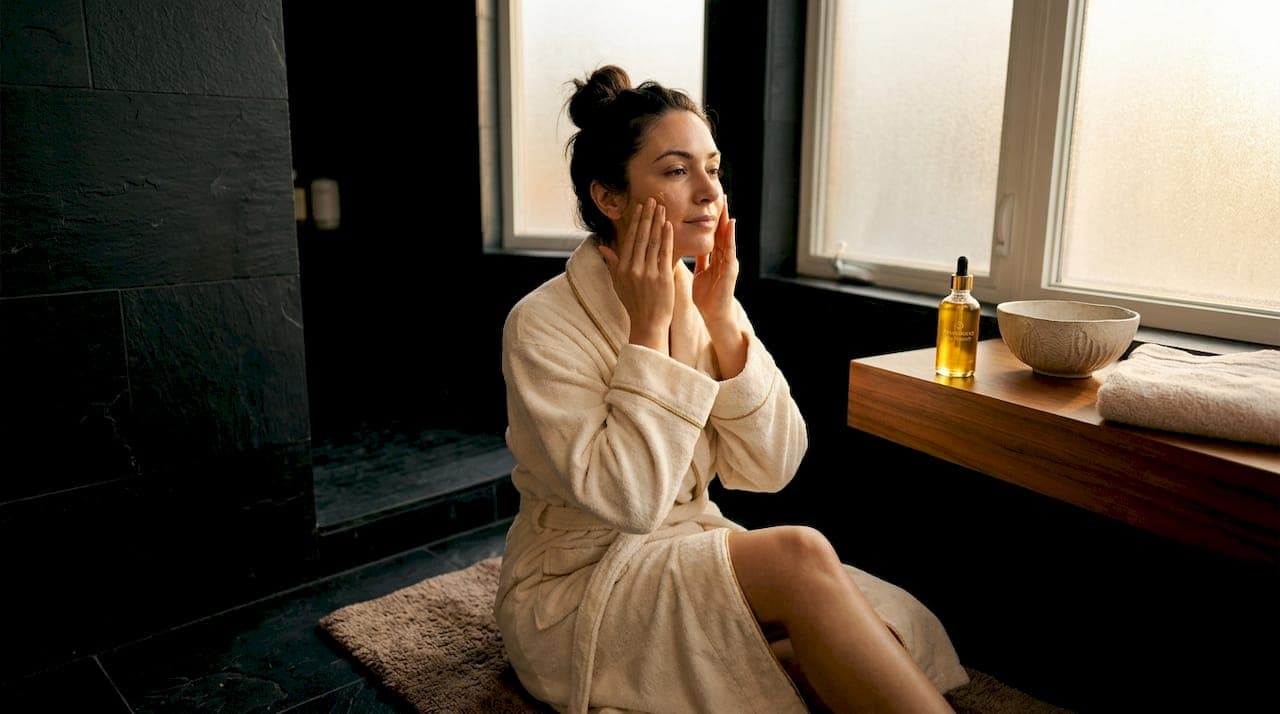
Argan oil massage has a reputation for being a spa-only indulgence, something you experience once on vacation and then forget about. That reputation sells it short. The truth is that topical argan oil massage is a cosmetic moisturizing and barrier-support practice you can bring into your daily routine at home, with real, science-backed results. This article cuts through the marketing noise, explains exactly what argan oil massage delivers, and gives you the practical knowledge to use it confidently, whether you are a first-timer or a devoted skincare enthusiast.
Table of Contents
- How does argan oil massage work?
- Science-backed benefits for your skin
- Precautions and edge cases: Is argan oil massage for everyone?
- How to use argan oil massage effectively at home
- What most people miss about argan oil massage
- Experience the benefits with premium argan oil
- Frequently asked questions
Key Takeaways
| Point | Details |
|---|---|
| Immediate hydration boost | Argan oil massage instantly softens skin and reduces dryness when applied with gentle, circular motions. |
| Clinically backed skin firmness | Long-term use of argan oil has been shown to improve skin elasticity measurably after several weeks. |
| Antioxidant and anti-inflammatory support | Bioactives in argan oil help defend skin from oxidative stress and provide comfort. |
| Precautions for sensitive skin | People with acne-prone or very sensitive skin should patch test and use small amounts to avoid breakouts. |
| Consistency matters most | Maintaining a regular massage routine is key to achieving lasting rejuvenation and wellness benefits. |
How does argan oil massage work?
Let's clarify what actually happens during an argan oil massage. The process is simpler than most people expect, and that simplicity is part of its beauty.
Argan oil is a golden, lightweight oil pressed from the kernels of the Argania spinosa tree, native to the sun-drenched landscapes of Morocco. When you apply it to your skin, you are delivering a rich blend of fatty acids, Vitamin E, and plant compounds directly to your skin's surface. The massage motion, typically gentle upward circular strokes, does two important things. First, it helps the oil absorb more evenly. Second, it stimulates circulation in the area being treated, which can make skin look temporarily more radiant and feel warmer to the touch.
According to research on topical application, argan oil massaged into skin with gentle motions until absorbed acts as a moisturizer that boosts softness and reduces dryness almost immediately. You will notice the difference after your very first session. Skin feels supple, looks smoother, and has a subtle, healthy glow that is hard to achieve with a basic lotion.
The oil also supports your skin barrier, the outermost protective layer that keeps moisture in and irritants out. A stronger barrier means less sensitivity, fewer rough patches, and more comfortable skin overall. These are cosmetic effects, not medical treatments, but they are genuinely noticeable and worth building a routine around.
Here is what happens step by step when you apply argan oil with a massage technique:
- The oil coats the skin surface and begins to penetrate the outer layers.
- Fatty acids like oleic and linoleic acid replenish lipids in the skin barrier.
- Vitamin E (tocopherols) provides antioxidant protection at the surface level.
- Massage motion distributes the oil evenly and warms it slightly, aiding absorption.
- Skin feels hydrated, soft, and visibly smoother within minutes.
Pro Tip: Warm 2 to 3 drops of argan oil between your palms before applying. The slight warmth makes the oil spread more easily and helps it absorb faster, especially on dry areas like elbows and knees.
If you are ready to start, shop organic skincare that features pure, high-grade argan oil sourced directly from Morocco.
Science-backed benefits for your skin
Understanding the process is important, but what does science say about real skin improvements from argan oil massage?
The answer is encouraging. Argan oil is not just a feel-good ingredient. It contains a specific set of bioactive compounds that researchers have studied in clinical settings. These compounds work together to deliver measurable skin benefits over time.
The key actives in argan oil and what they do:
| Active compound | What it does for skin |
|---|---|
| Tocopherols (Vitamin E) | Neutralizes free radicals, protects against oxidative stress |
| Polyphenols | Reduces inflammation, supports skin comfort |
| Phytosterols | Supports skin barrier repair and hydration retention |
| Oleic acid | Deeply moisturizes and softens skin texture |
| Linoleic acid | Helps maintain the skin's natural lipid barrier |
Research confirms that argan oil contains antioxidant and anti-inflammatory bioactives that plausibly support skin comfort during massage routines. These are not vague marketing claims. They are specific molecular mechanisms studied in peer-reviewed journals.
One of the most compelling findings comes from clinical research on skin elasticity. Topical argan oil can improve skin elasticity in postmenopausal women over approximately 60 days of consistent use. Elasticity is a key marker of youthful, healthy skin. When skin loses elasticity, it begins to sag and develop fine lines more easily. Improving elasticity through a regular argan oil routine is a meaningful, measurable outcome.
Here is a quick summary of the most studied benefits:
- Hydration boost: Immediate and sustained moisture increase after application.
- Elasticity improvement: Clinically documented over 60-day use periods.
- Antioxidant protection: Vitamin E and polyphenols guard against environmental damage.
- Anti-inflammatory comfort: Reduced redness and irritation with consistent use.
- Barrier reinforcement: Phytosterols help repair and maintain the skin's protective layer.
The massage component itself plays a supporting role here. It is not magic, but it does matter. Massage increases blood flow to the skin surface, which can temporarily enhance nutrient delivery and give skin a more vibrant appearance. It also ensures the oil makes full contact with the skin rather than sitting on top in uneven patches.
Pro Tip: For maximum elasticity benefits, apply argan oil to your neck and décolletage as well as your face. These areas lose elasticity quickly and are often overlooked in standard skincare routines.
Precautions and edge cases: Is argan oil massage for everyone?
While the benefits are appealing, not everyone's skin reacts the same way, so let's look at who should proceed with caution.
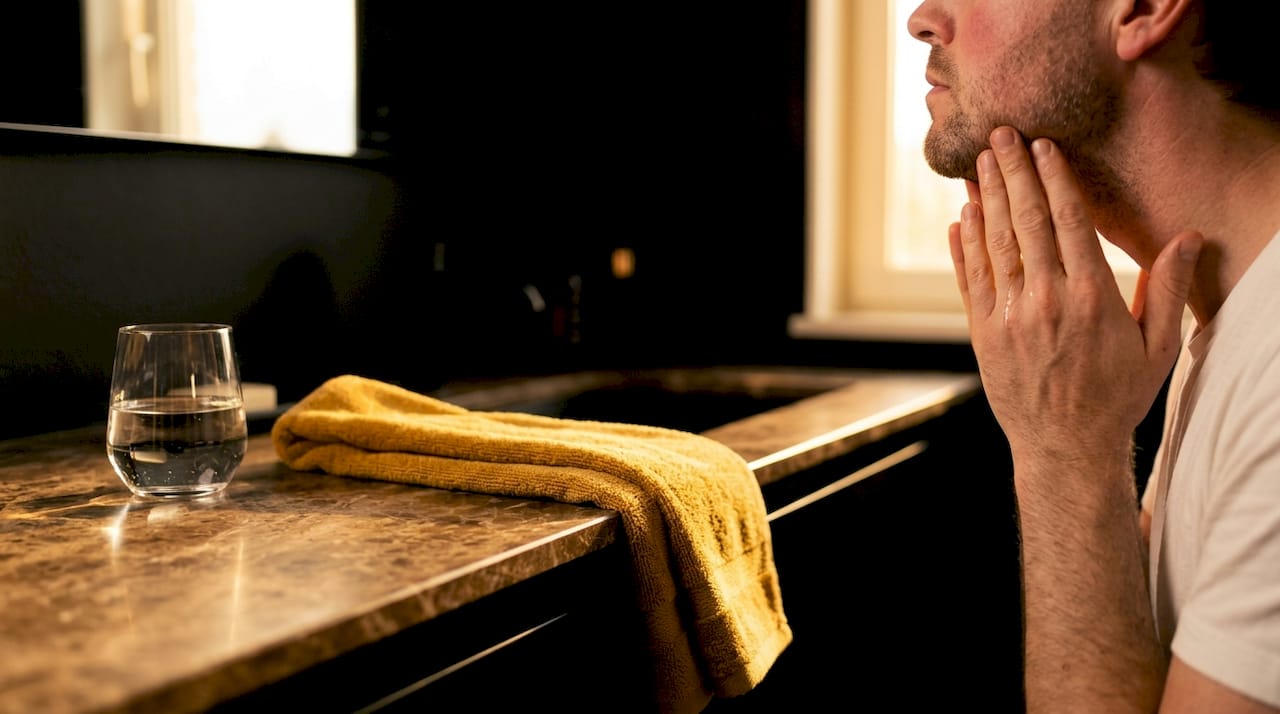
Argan oil is generally well tolerated, but it is still an oil, and that matters for certain skin types. If you have oily or acne-prone skin, you need to be thoughtful about how you use it. Over-application can lead to clogged pores and irritation for some people, particularly those with oily or acne-prone skin. This does not mean you cannot use argan oil. It means you need to use it wisely.
"Less is more" is not just a style philosophy. When it comes to facial oils, applying too much can undo the very benefits you are trying to achieve. A thin, fully absorbed layer is always better than a heavy, greasy coat.
Here is a simple guide to using argan oil safely, especially if your skin is on the sensitive or oily side:
- Patch test first. Apply a small amount to the inside of your wrist or behind your ear. Wait 24 hours. If you see no redness, itching, or breakouts, you are likely safe to use it on your face.
- Start with a minimal amount. Use 1 to 2 drops for the face. You can always add more if your skin absorbs it quickly.
- Limit frequency initially. Begin with 2 to 3 times per week rather than daily. This gives your skin time to adjust.
- Avoid heavy application on active breakouts. Argan oil is not an acne treatment. Applying it over active pimples can trap bacteria and worsen inflammation.
- Monitor your skin for 2 to 3 weeks. If you notice increased breakouts or congestion, reduce frequency or stop use.
- Choose pure, cold-pressed argan oil. Additives and synthetic fragrances in low-quality products are often the real culprits behind irritation, not the argan oil itself.
If you have a known nut allergy, consult your dermatologist before using argan oil, since it is derived from a tree nut. This is a rare concern, but worth mentioning.
For most people with normal, dry, or combination skin, argan oil massage is a wonderfully safe and rewarding practice. The key is starting slowly and paying attention to how your skin responds. You can find safe massage routines and gentle formulations designed for a range of skin types in our collection.
Pro Tip: If you have oily skin, try using argan oil only at night. Overnight application gives your skin time to absorb the oil fully without the risk of looking greasy during the day.
How to use argan oil massage effectively at home
Now that you know what to watch out for, here is how to maximize the real benefits of argan oil massage at home.
The good news is that you do not need a professional spa setup or special training. A few simple techniques, practiced consistently, will get you the results you are looking for.
Comparison: Massage approaches for different goals
| Goal | Technique | Frequency | Amount |
|---|---|---|---|
| Daily hydration | Light upward strokes, face and neck | Daily or every other day | 2 to 3 drops |
| Skin rejuvenation | Circular motions, focus on cheeks and forehead | 3 to 4 times per week | 3 drops |
| Body softening | Long, sweeping strokes on arms and legs | 2 to 3 times per week | 5 to 8 drops |
| Hand care | Gentle kneading into palms and knuckles | Daily | 1 to 2 drops |
| Relaxation ritual | Full-body slow strokes, Hammam-inspired | Weekly | As needed |
Research makes clear that clinical improvements in elasticity are studied over multi-week periods, and massage mainly helps distribute the oil and keep contact time on skin. Consistency is what drives results, not a single luxurious session.
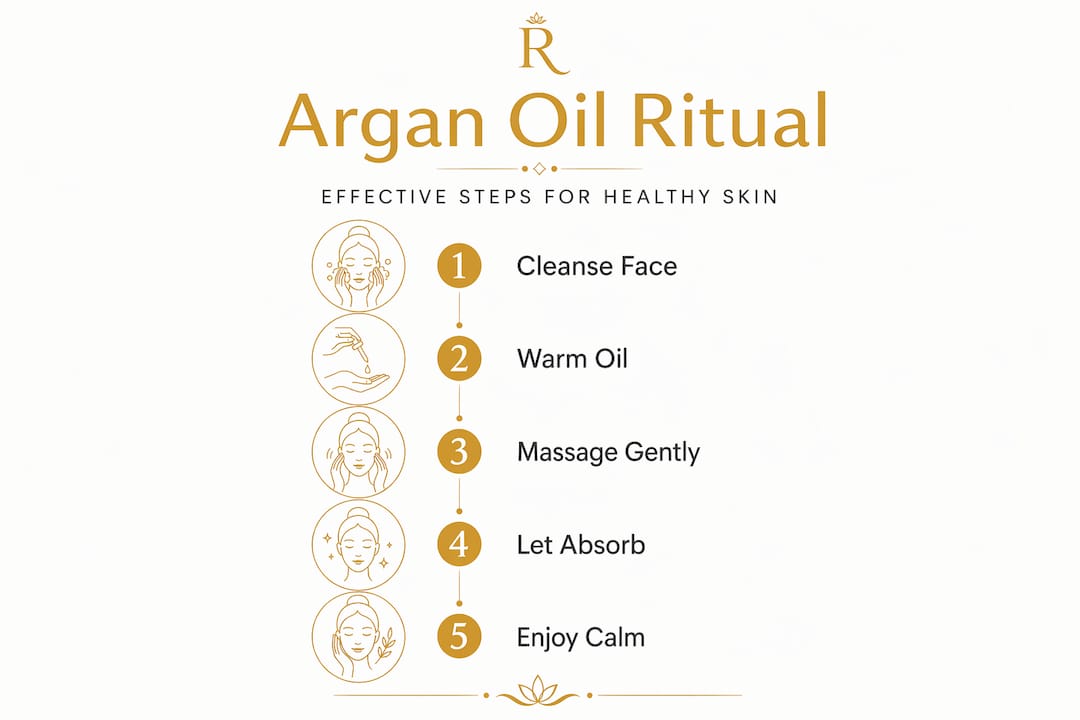
Here is your step-by-step home routine:
- Cleanse your skin first. Apply argan oil to clean skin so there is no barrier of dirt or makeup blocking absorption.
- Warm the oil. Place 2 to 3 drops in your palms and rub them together for 5 seconds.
- Start at the center of your face. Press your palms gently onto your cheeks, then sweep outward and upward toward your temples.
- Work your forehead. Use your fingertips in small circular motions from the center outward.
- Don't forget your neck. Use upward strokes from your collarbone to your jawline. This area benefits enormously from regular argan oil application.
- Allow full absorption. Wait 3 to 5 minutes before applying any other products. The oil should feel absorbed, not greasy.
- Follow with your regular routine. Argan oil works well under serums and moisturizers as a base layer.
For sensitive or acne-prone individuals, start with a small amount and patch test. Reduce frequency if you notice breakouts or irritation. This simple caution protects your skin while still allowing you to enjoy the benefits.
You can find quality argan oil and complementary Moroccan skincare products that pair beautifully with this routine.
Pro Tip: Try your argan oil massage right after a warm shower. Your pores are open, your skin is slightly damp, and the oil absorbs faster and more evenly than on completely dry skin.
What most people miss about argan oil massage
Here is the part most skincare content skips over, and it is the most important thing we can share with you.
Everyone gets excited about technique. People search for the perfect massage method, the ideal number of strokes, the exact angle of their fingers. And while technique matters a little, it is not what separates people who get results from those who do not. The real differentiator is something far less glamorous: showing up consistently, week after week, with a simple routine.
The clinical studies that show elasticity improvements over 60 days are not measuring fancy spa techniques. They are measuring what happens when skin receives regular, adequate doses of argan oil's active compounds over time. The massage is the delivery mechanism. The consistency is the treatment.
We have seen this pattern again and again. People try argan oil for a week, feel their skin is softer, and then get distracted by the next trending ingredient. They never give their skin the sustained exposure it needs to show the deeper changes: improved firmness, better texture, more resilient barrier function. Those changes take weeks, not days.
The other thing people miss is the ritual value. A 5-minute argan oil massage before bed is not just skincare. It is a moment of intentional self-care in a day that probably had very few of those moments. The act of slowing down, breathing in the earthy, nutty aroma of pure argan oil, and taking care of your skin has a calming effect that compounds over time. You sleep better. You feel better about yourself. Your skin reflects that.
So our honest advice is this: pick a simple routine, use a small, consistent amount of high-quality argan oil, and commit to it for at least 8 weeks before judging the results. You will likely be surprised by what you see.
Experience the benefits with premium argan oil
You now understand what argan oil massage truly delivers, and you have the practical knowledge to make it work for your skin. The next step is making sure you are using a product that lives up to the science.
At Renaissance de Beaute, we bring the authentic beauty rituals of magical Morocco directly to you. Our organic skincare collection is built around pure, high-grade argan oil and natural plant extracts sourced from Morocco, the same ingredients used in traditional Hammams for generations. Whether you are looking for a rejuvenating facial serum, a nourishing body treatment, or a classic black soap scrub ritual, we have formulations crafted for real skin wellness. Explore our pure argan oil options and discover the difference that genuine, organic ingredients make. Your radiant skin is waiting. Visit our skin care shop and GET GLOWING SKIN today!
Frequently asked questions
Does argan oil massage really improve skin elasticity?
Yes, clinical evidence shows that consistent topical argan oil use can significantly improve skin elasticity over approximately 60 days of regular application.
Is argan oil massage safe for acne-prone skin?
It can cause clogged pores or breakouts if overapplied, so patch test first with a small amount and reduce frequency if you notice irritation or new breakouts.
How much argan oil should I use for a facial massage?
Apply just 2 to 3 drops to your face and neck, then massage in gentle upward circular motions until the oil is fully absorbed.
How often should I do an argan oil massage for best results?
Optimal results come from consistent use, typically 2 to 3 sessions per week, since elasticity improvements are documented over multi-week study periods.
Are the benefits just temporary or long-lasting?
Immediate softening is temporary, but routine use over 60 days can produce longer-lasting improvements in skin firmness and elasticity that go beyond surface-level hydration.